Elmswood, No 26 Lathbury Road
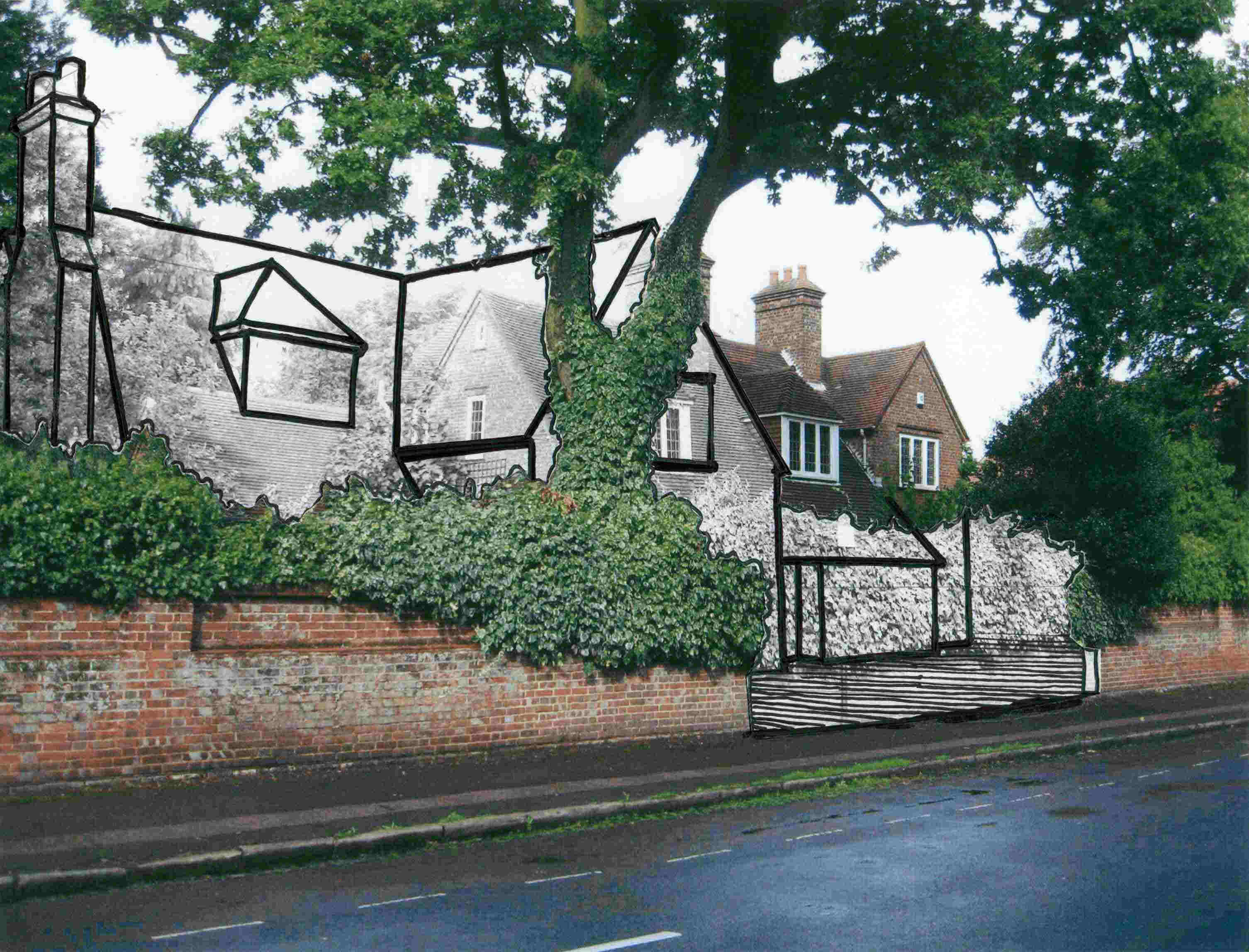
The rejected development proposal inserted
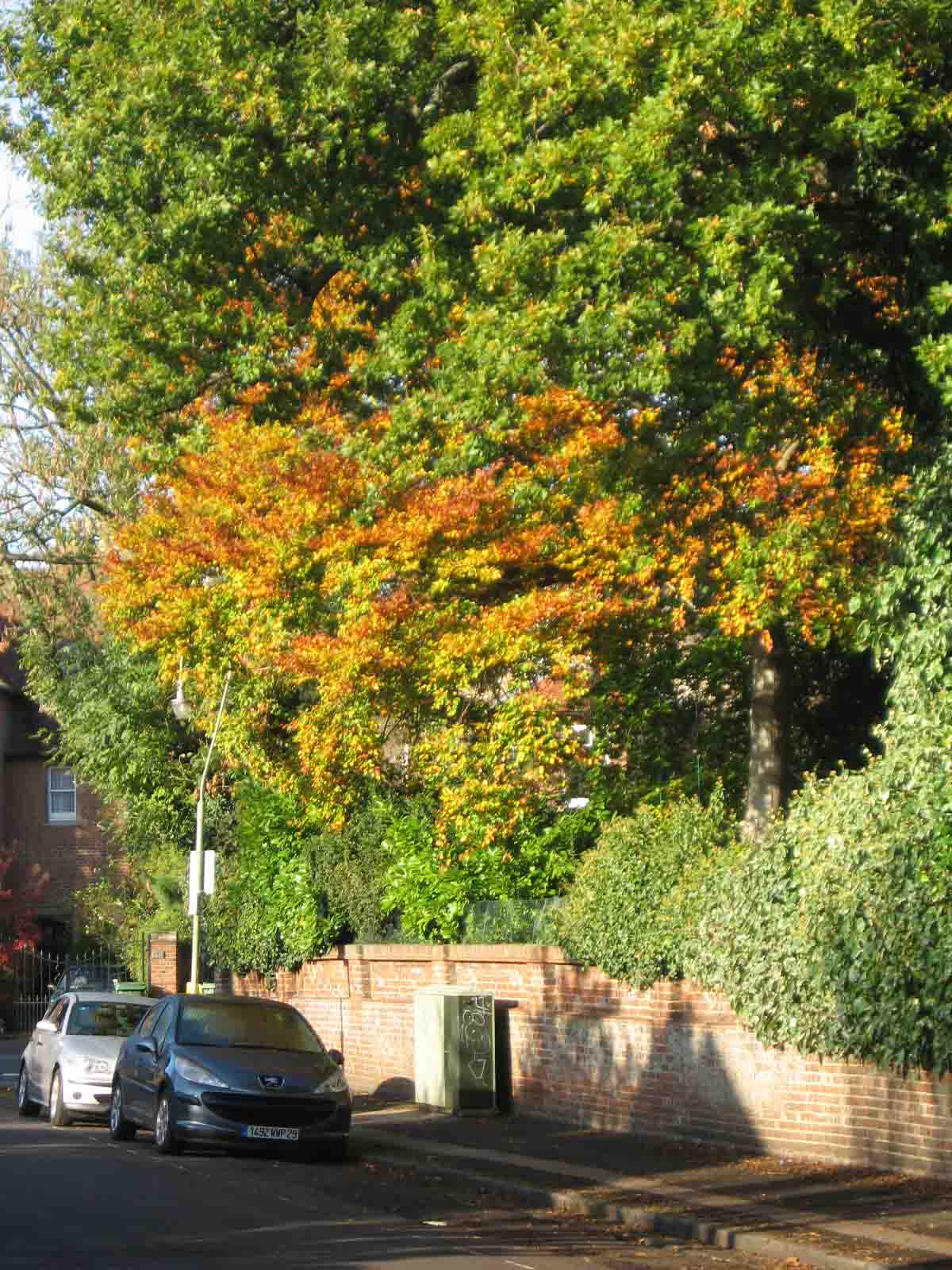
The trees on Lathbury Road
Page 3 (Click here for other pages)
The Planning Applications - Contribution of the house
The house is listed by the City Council as being of special interest. This has been acknowledged in the officers' report on the 2006 application and in the refusal notice. It was said:
No 26 Lathbury Road (begun in 1913 to the designs of Percy Morley Horder) [is] a building of local interest in its own right...

The following expert comments were made on the house following the 2008 application, and were equally relevant to the most recent application (because the proposal was identical):
 | "The proposed development effectively destroys the value of the house; it erases the imprint of its builder ([Bishop] Herford's chapel, or oratory, vanishes); it would result in such a development (in effect over-development) as might be found in the better, if declining parts of any industrial town." Professor Clyde Binfield OBE, FSA, FRHistS (a leading expert on the architecture of Percy Morley Horder). |
| "The house is of architectural interest as a rare example in Oxford of the Arts and Crafts style, designed by the eminent architect Morley Horder and built around 1913 in red brick with low eaves and dormer windows, surrounded by a large wooded garden within a handsome brick wall. A unique feature is the chapel, of historical interest, now used as a library and dining area. Despite some additions and alterations the house retains a distinctive character of much charm. It makes a special contribution to the North Oxford Suburb Conservation Area, being visible from both Lathbury Road and Woodstock Road. The house in its setting fully deserves to be conserved with only minimal and of course sympathetic alteration... Demolition was proposed in 2006, but was refused. The current proposal would be as damaging as demolition and it would not preserve or enhance the character of the Conservation area..." Oxford Civic Society, 21 October 2008 |
| "[The developer] claims that the intention is 'to give the impression of a serene unaltered late Arts and Crafts house, set snugly within its mature landscape garden'. This is preposterous. The most significant words here are 'to give the impression': the result would be quite different... We consider the amount of alteration proposed is unacceptable. The reference to the house being 'set snugly within its mature landscape garden' is even more preposterous, considering how much of the garden is to be destroyed. G. F. Tull, the biographer of Herford (1958), describes the garden as a 'constant delight'..." The Victorian Group of the Oxfordshire Architectural and Historical Society, 23 October 2008. |
| "We are extremely concerned to see that 26 Lathbury Road and its garden continues to be seen by the applicants as a site that is suitable for development. We do not share this view as this house and its garden on its corner plot onto Lathbury Road and Woodstock Road add much to the character of the North Oxford Conservation Area, an important suburb of Oxford, and what is being proposed will harm this as it is too dense and out of character with the grain of the area. ... We draw attention to the City Council's own draft Conservation Area Appraisal which describes the area as 'Predominantly a planned mid-to-late Victorian garden suburb' with 'Generous loose grid formation throughout the suburb with ... significant plot and property sizes in the east ...'. We also draw attention to English Heritage's guidance on Suburbs and the Historic Environment'. English Heritage does not oppose the principle of intensification per se, but this must not be at the expense of an area's special character or historic integrity". Oxford Preservation Trust, 22 October 2008. |
All of the above renewed their observations for the most recent application. They may be found on page 6.
The local plan policy is clear with respect to buildings of local architectural and historical importance, bearing in mind that the law requires the Council to pay special regard to, and thus to refuse any application that would harm the conservation area. It gives examples of what is to be taken into account (at paragraph 5.5.1):
Key elements of a conservation area that the City Council may include are the architectural design or historic interest of buildings; the materials, in terms of colour and texture; the contribution of green and open spaces; street patterns and spaces between buildings; and views in and out of the area. The City Council will use its planning powers to preserve and enhance the special character, appearance and setting of each conservation area.
In addition to policy HE.7, reproduced on the Introduction page, the Council is bound to have special regard to any partial demolition in the same light as complete demolition. Its Policy is:
|
POLICY HE.6 - BUILDINGS OF LOCAL INTEREST |
|
Planning permission will only be granted for development that involves the demolition of a Building of Local Interest, or that would have an adverse impact on the building or its setting, if: a. the applicant can justify why the existing building cannot be retained or altered to form part of the redevelopment; and [our emphasis] b. the development will make a more positive contribution to the character and appearance of the area. |
Links to other sources:
| Oxford Local Plan - Historic Environment - click here - see section 5.5 on page 67. |
| Oxford City Council - web page - Conservation areas - click here. |
| Oxford City Council - web page - North Oxford Victorian Suburb - click here. |
| Oxford City Council - North Oxford Victorian Suburb Conservation Area Overview - click here |
| Oxford City Council - North Oxford Victorian Suburb Conservation Area Appraisal - Draft - click here. |
| English Heritage - Suburbs and the Historic Environment - Click here. |
See also:
Letters from our Residents Association to the City Council, 6 October 2009; 12 January 2010 and 20 January 2010
The next page contains news; scroll down and click on page 4.
This is page 3
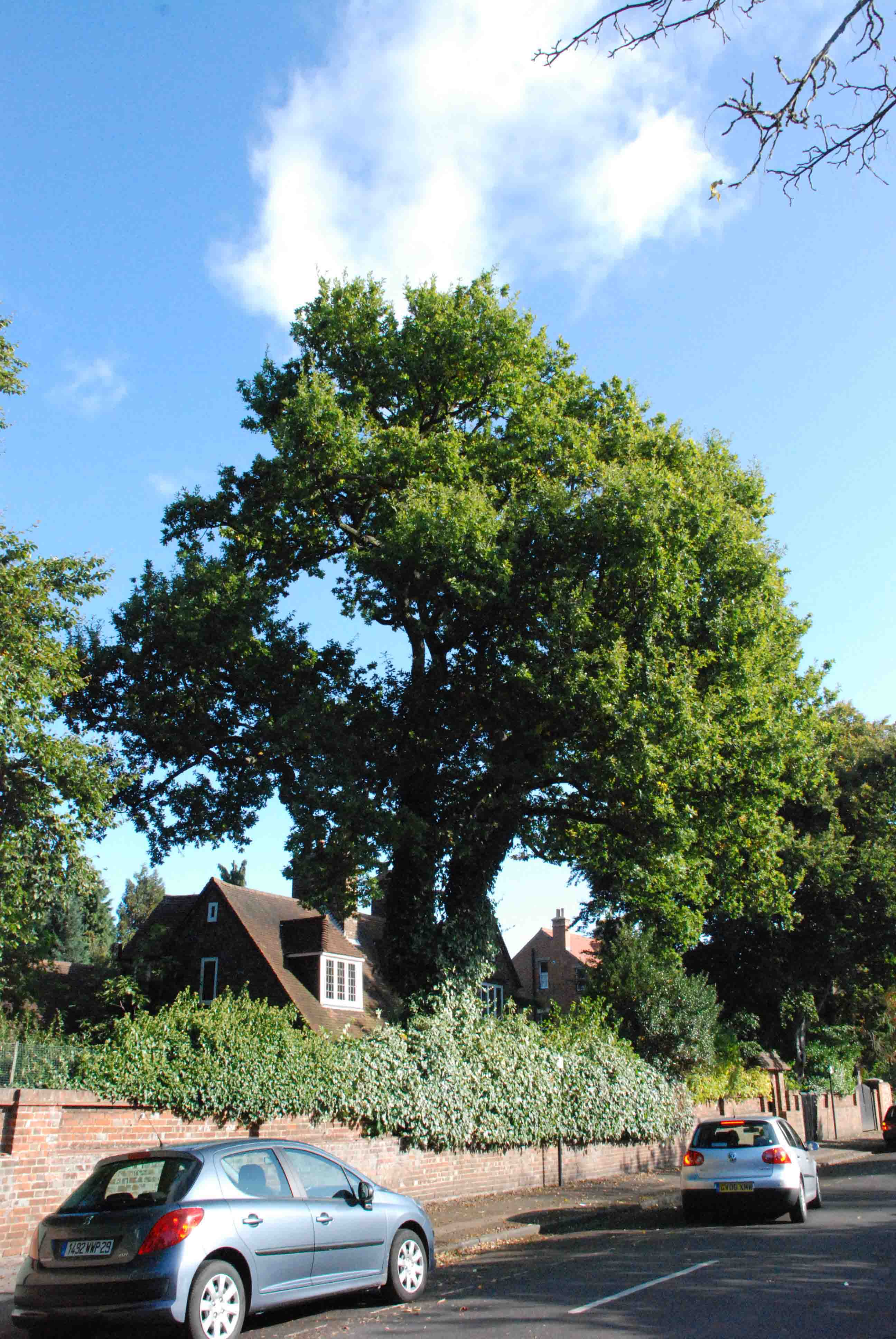
The heavily pruned oak tree on Lathbury Road
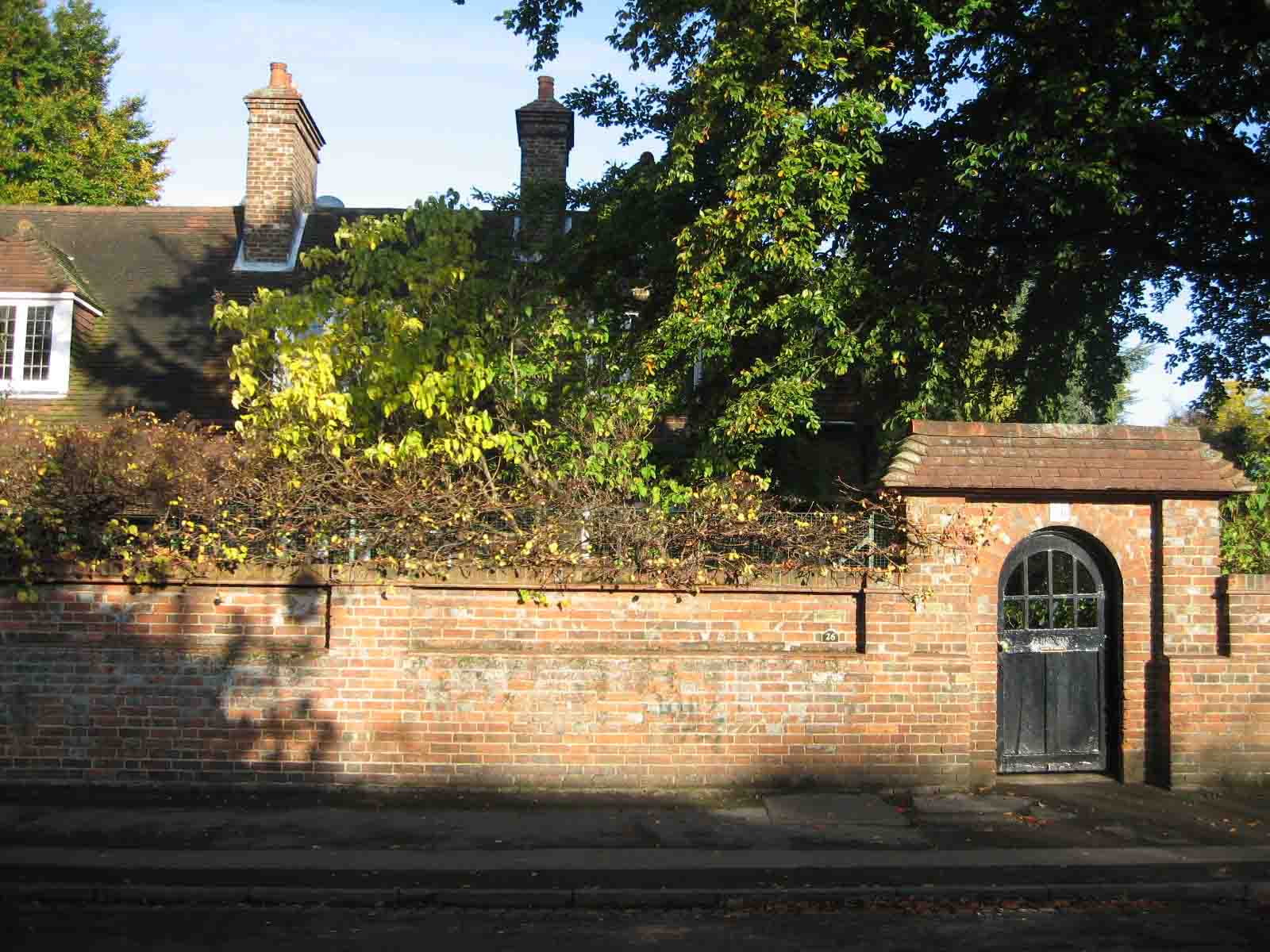
The arched gate and the roofscape
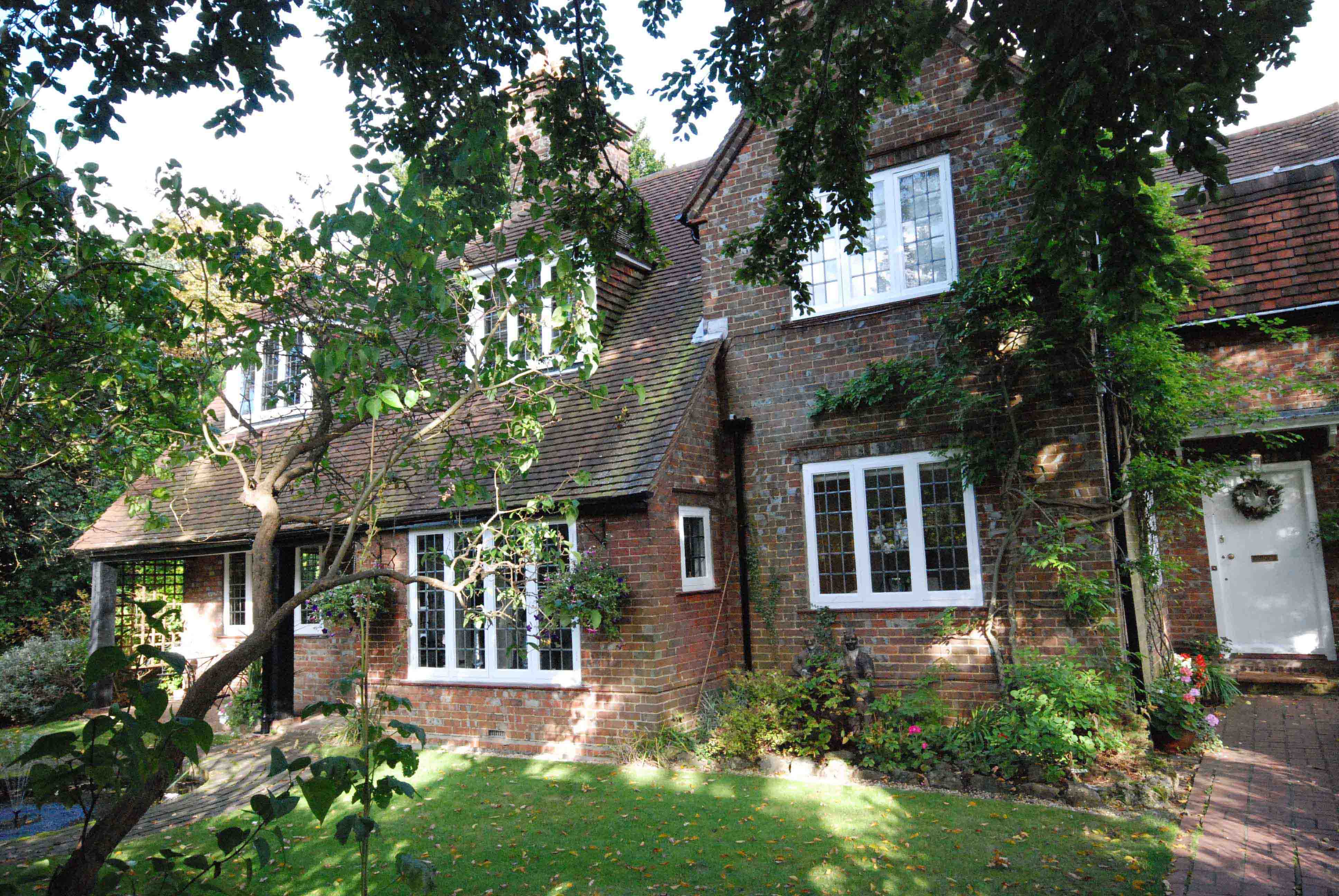
The front garden, seen through the gate, will be lost.