Elmswood, No 26 Lathbury Road
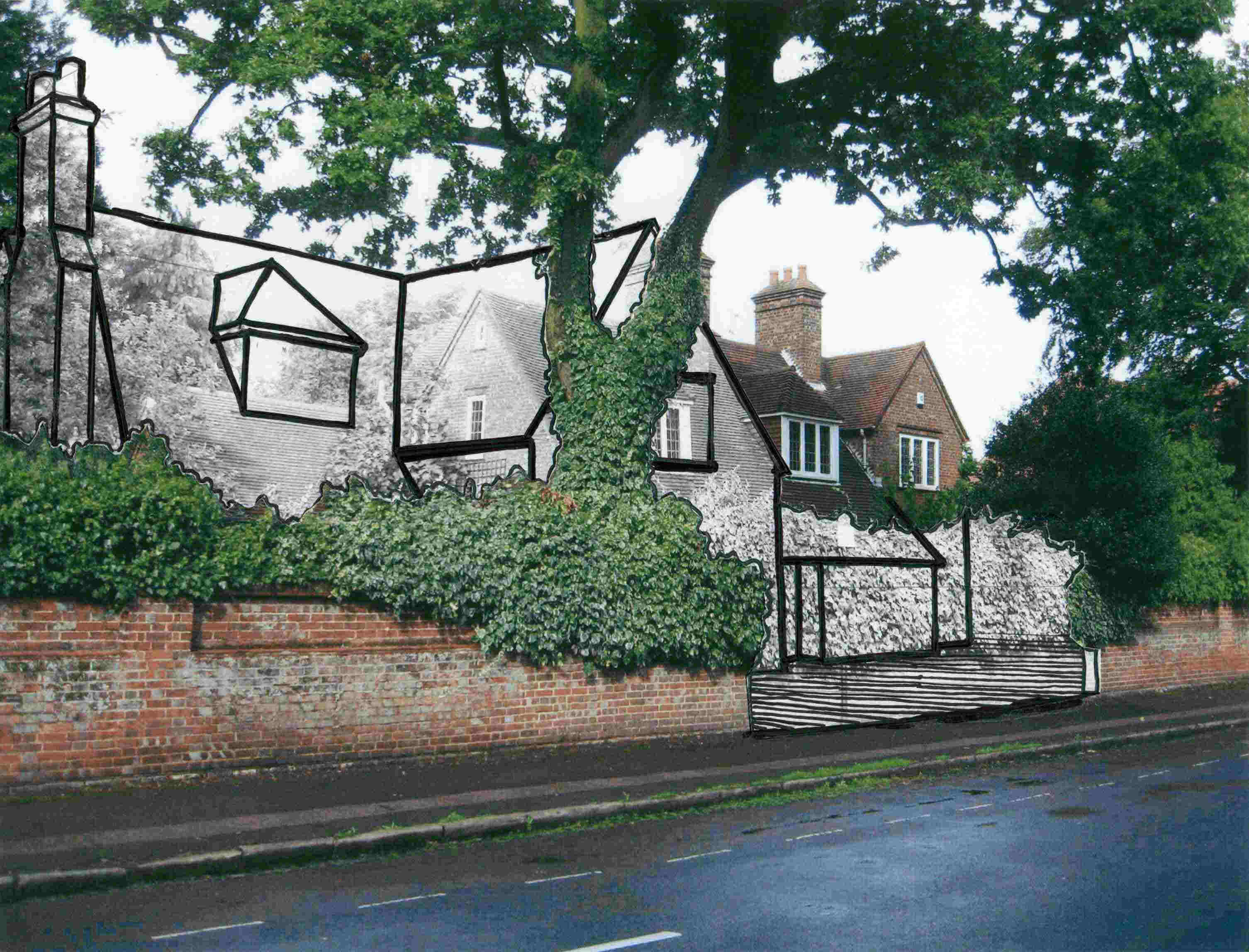
The rejected development proposal inserted
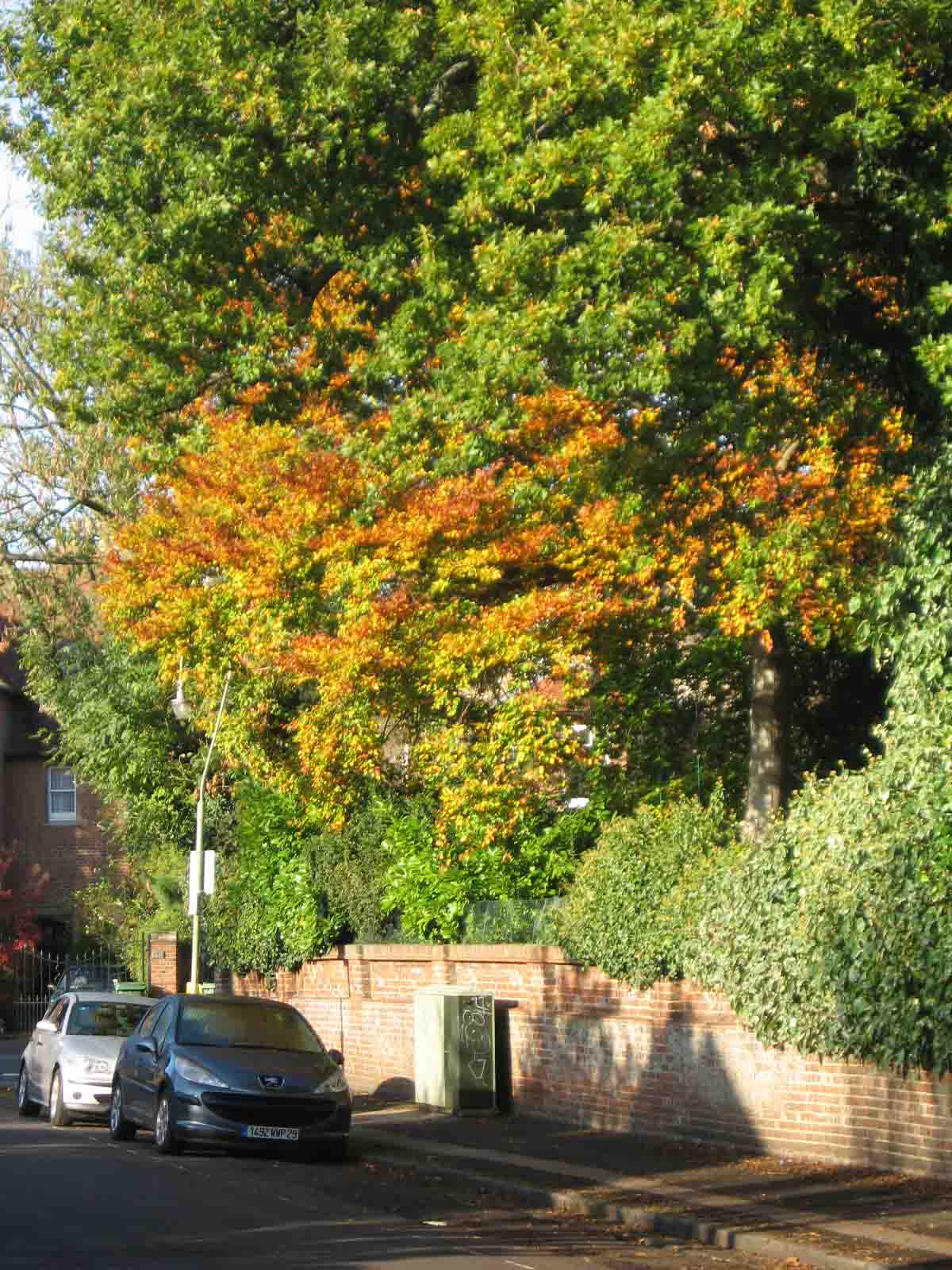
The trees on Lathbury Road
Introduction (Click here for other pages, including a picture gallery)
The house pictured on the left stands on the corner of Lathbury Road and Woodstock Road. In the past three years there have been four planning applications to develop this land. Three applications have been rejected and one withdrawn. The Residents Association, with support from many others including leading experts and amenity groups, has to date successfully campaigned against all of these applications. However, the most recent application, a representation of which shown to the left, is now the subject of an appeal.
If this appeal is successful, then one of the most important plots in the North Oxford Victorian Garden Suburb Conservation Area will be lost. This would be contrary to the City Council's own appraisal of the area, where it has said:
North Oxford’s wide roads, large red and yellow brick villas in spacious gardens and tree-lined avenues only form one aspect of the special character of this suburb. Undervalued for many years, the elegant houses of North Oxford had to fight for survival against potential university expansion. Their attributes finally won public acceptance in the mid-20th century with a proportion of the St John’s estate, mainly that of Norham Manor and Park Town, being designated as Oxford City Council’s first conservation area. Since its initial designation, the suburb’s appeal has continually increased and is now regarded as one of the most complete Victorian suburbs in England. On first sight, North Oxford may appear to be a Victorian gothic suburb but there is far more to it. Behind the main roads lies a myriad of housing characterised by size, design, materials and age of development.
Links to the City Council's website follow:
1st application 06/01846/FUL Refused 9 November 2006
2nd application 08/02028/FUL Refused 18 December 2008
3rd application 09/01956/FUL Withdrawn 8 October 2009
4th application 09/02175/FUL Refused 3 December 2009 and 27 January 2010.
The Appellant's Statement together with those of the City Council and this Residents Association, together with other objections, are also listed.
(Click on "Associated Documents", and then "View Associated Documents")
The decision notice dated 4 February 2010 and refusing consent may be seen here.

City Conservation Area Policy, which must be applied by the appeal inspector
At the foot of this page (and on each page) you will find links to pages which describe those aspects of the scheme that run counter to Oxford City's Local Plan. But by far in a way the most important criterion for determining the application is whether or not this proposed development either preserves or enhances the conservation area. Here is the relevant policy:
|
POLICY HE.7 - CONSERVATION AREAS |
|
Planning permission will only be granted for development that preserves or enhances the special character and appearance of the conservation areas or their setting. Planning permission will not be granted for proposals involving the substantial demolition of a building or structure that contributes to the special interest of the conservation areas. The boundaries of the conservation areas are shown on the Proposals Map. |
This rule is allows for no exception, and follows section 72(1) of the Planning (Listed Building and Conservation) Act, 1990. The Planning Inspector will follow the City Council's policy (see section 38(6) of the Planning and Compensation Act 2004). The question is therefore whether this proposal, if allowed, would be harmful.
What is harmful?
The question of what is "harmful" has been given some weighty judicial consideration. In Bath Society v Secretary of State for the Environment [1991] JPL 663 Glidewell LJ formulated authoritative guidance on the application of section 72, saying:
 | that where a development proposal was in a conservation area, there were two statutory duties for the decision-maker to perform; that imposed by section 72 as well as the duty to have regard to the development plan and any other material considerations; |
| the requirement to pay 'special attention' in section 72 should be the first consideration for the decision-maker and it carried considerable importance and weight; |
| if the decision-maker decided that the proposal would neither preserve nor enhance the character or appearance of the conservation area, then it would almost inevitably mean that it would have some detrimental, i.e. harmful effect. |
This third proposition was not accepted by the Court of Appeal in South Lakeland District Council v Secretary of State for the Environment [1991] JPL 654. There, Mann LJ said: "the statutorily desirable object of preserving the character or appearance of an area was achieved either by a positive contribution to preservation or by development which left the character or appearance unharmed, that is to say, preserved". This was later approved by the House of Lords - [1992] 2 AC 14; and this represents the current status of the law.
See also the Government's Planning Policy Guidance 15: Planning and the Historic Government. In particular, see paragraph 3 of the Introduction ("This guidance is not only for local authorities...") and the section dealing with Conservation area control over demolition which starts at paragraph 4.25. At paragraph 4.28 the following guidance is given:
Section 336 of the principal Act states that a building includes 'any part of a building'. The demolition of part of a building should therefore be regarded as falling within the scope of conservation area control.
And at paragraph 4.26:
In exercising conservation area controls, local planning authorities are required to pay special attention to the desirability of preserving or enhancing the character or appearance of the area in question; and, as with listed building controls, this should be the prime consideration in determining a consent application. In the case of conservation area controls, however, account should clearly be taken of the part played in the architectural or historic interest of the area by the building for which demolition is proposed, and in particular of the wider effects of demolition on the building's surroundings and on the conservation area as a whole.
And at paragraph 4.25:
Procedures [for demolition] are essentially the same as for listed building consent applications.
We believe, as have all objectors to date, that this appealed proposal, if allowed, will fail to preserve or enhance the special character and appearance of the conservation area. The City Council have agreed. Moreover, as many have pointed out, this application has relevance to the future of the whole conservation area, not only this valuable piece of land.
Housekeeping
Some notes on using this website. You will find that links to other sites open new pages. This has been arranged so that several pages can be kept open at once. However, it also means that the "back button" will not work. So either flip from page to page using Alt-Tab, or close the linked page.
Please right-click this page and save it to your Favourites, then scroll down to the links at the bottom of this page and click on page 1.
This page is the Introduction
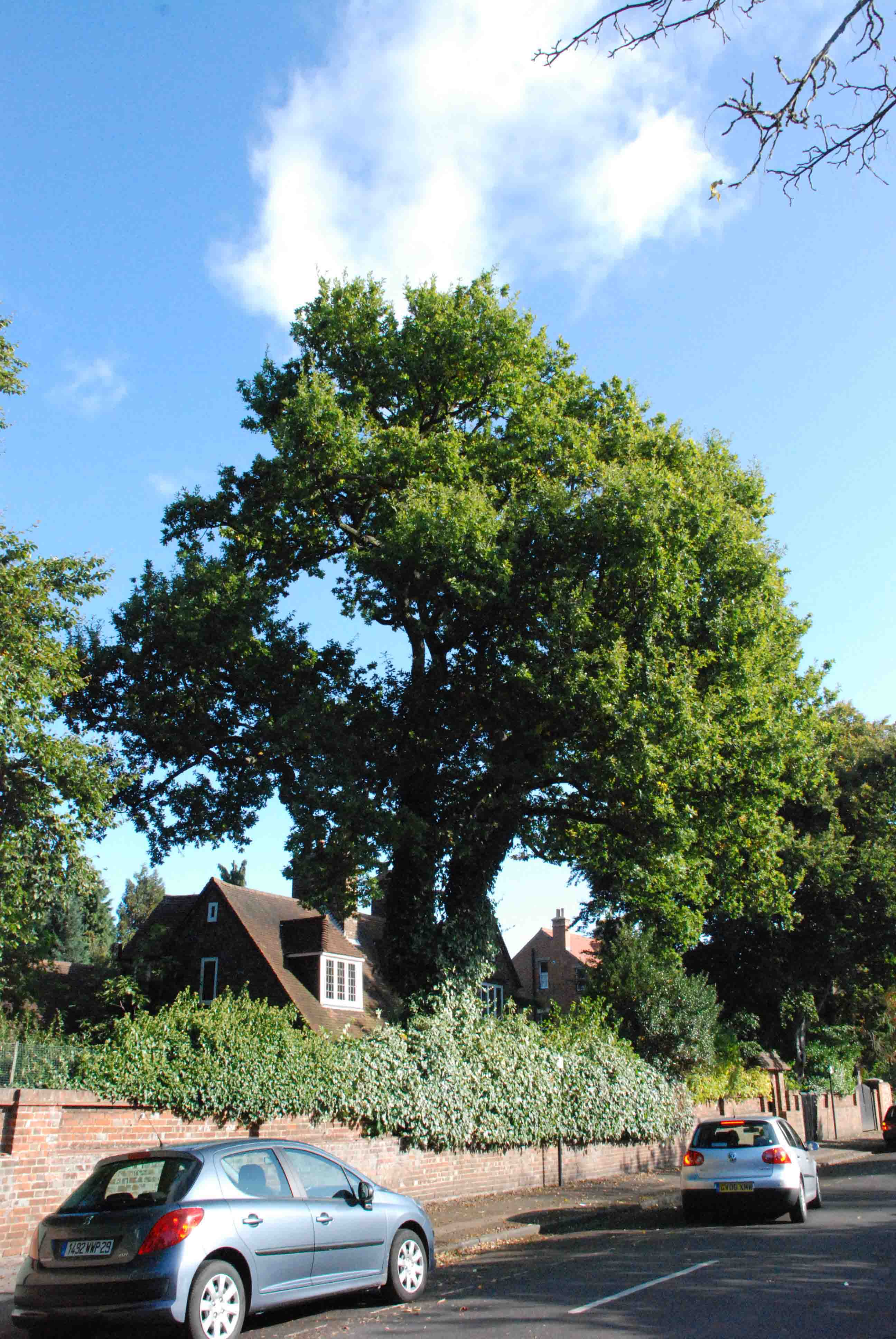
The heavily pruned oak tree on Lathbury Road
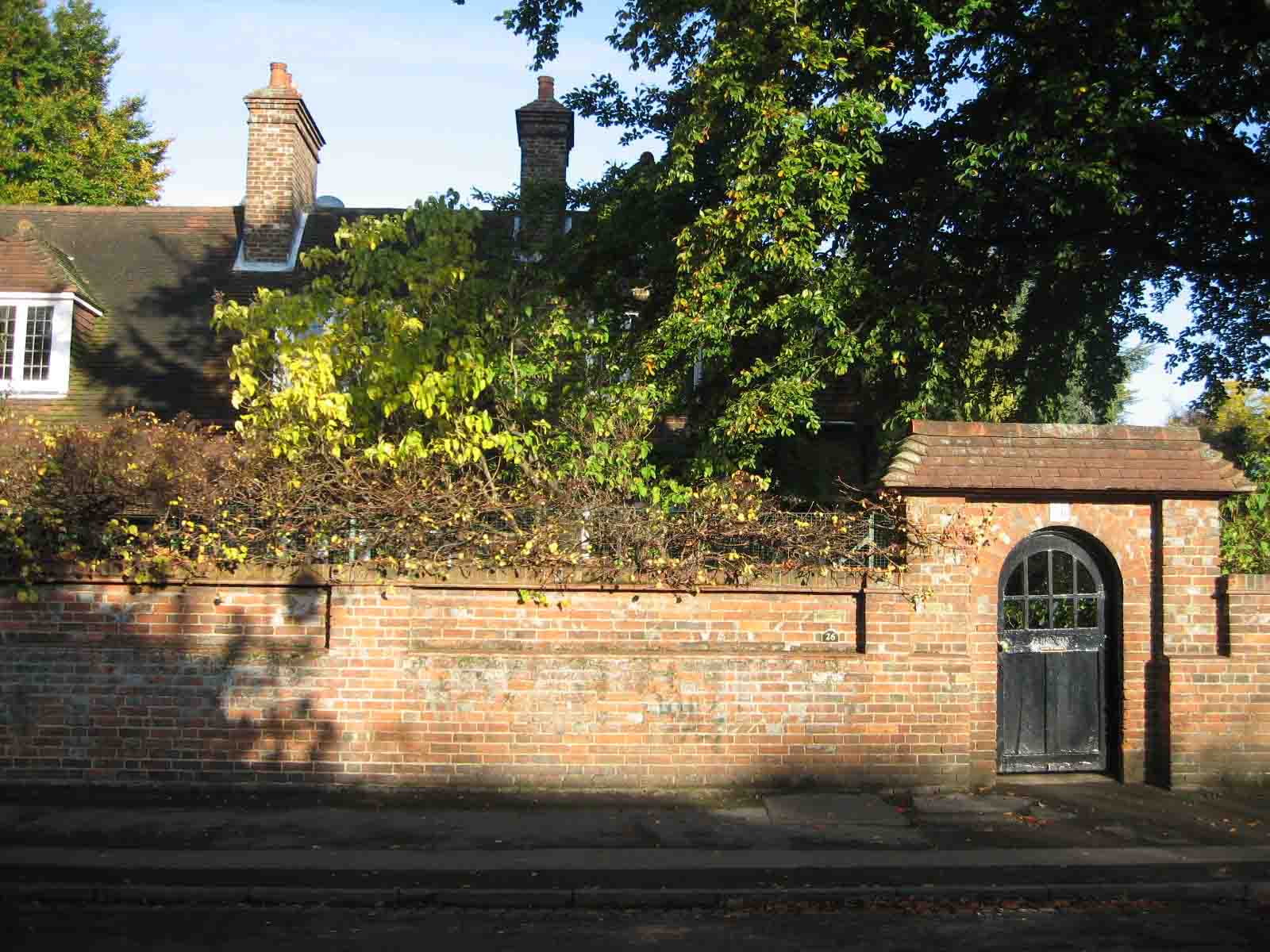
The arched gate and the roofscape
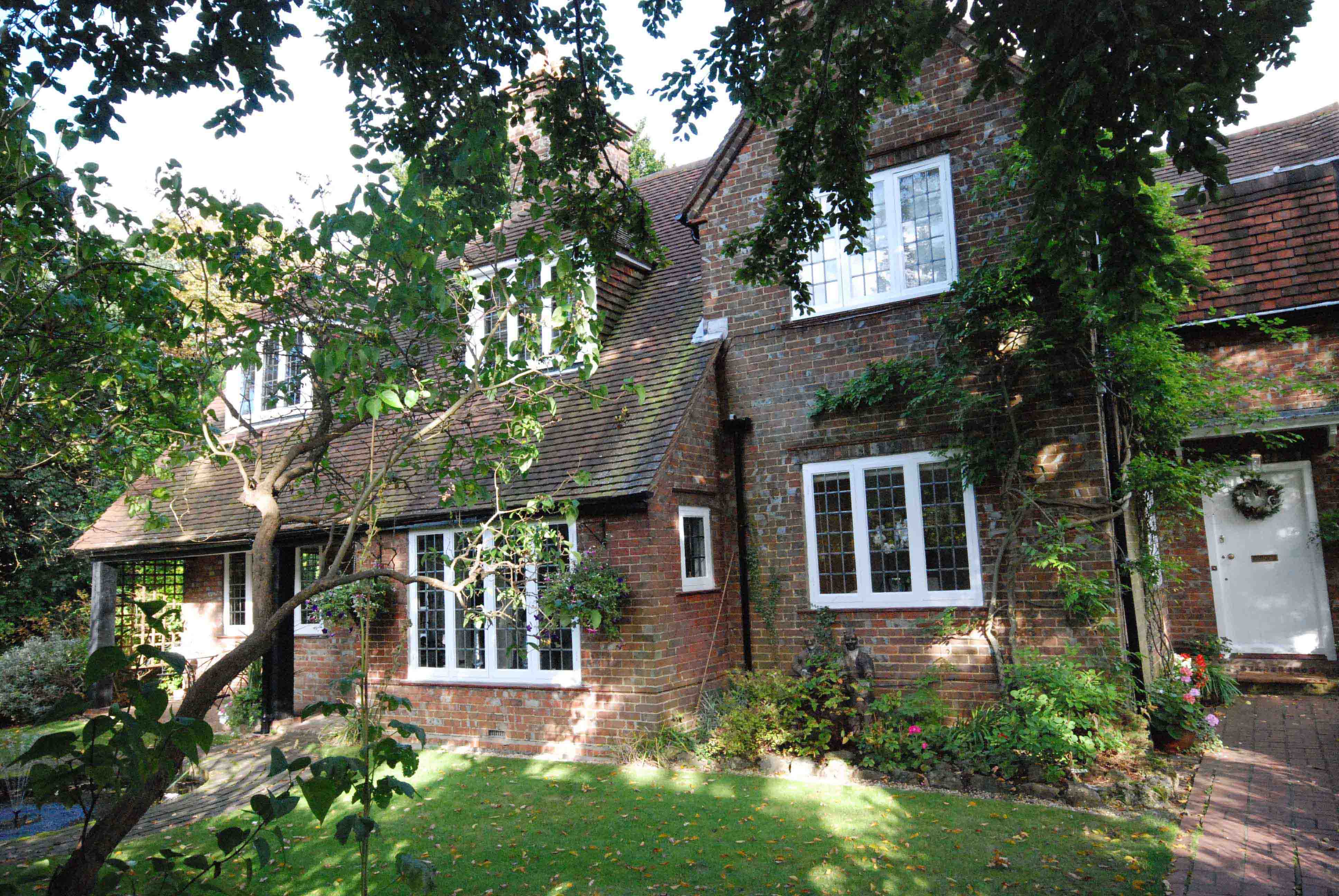
The front garden, seen through the gate, will be lost.